
Double-Loop Learning – Avoiding the "Multiplying by Zero" Trap

Welcome back to another edition of my AI nerd newsletter! Today, I want to explore a powerful concept that resonates across education, business, and personal growth: Double-Loop Learning.
It’s an interesting metaphor that will help you understand why some of your projects might feel like they’re going nowhere, despite your best efforts.

Multiplying by Zero: A Powerful Metaphor
In mathematics, multiplying any number by zero results in zero. No matter how large the number, the outcome remains the same—zero. This idea, while simple, holds profound implications beyond the world of numbers.
Think of a project you’ve worked on, or maybe something you're currently working on. You’ve poured hours of effort, creativity, and energy into it. Yet, something’s not right, and the results aren’t reflecting your hard work. You might be dealing with a zero somewhere in the process—one small but critical flaw that’s holding everything back.
In life and work, this can be a weak link in your system, a gap in your plan, or a critical oversight that undermines your progress. It could be anything from an overlooked assumption in a project plan, a single miscommunication that derails a team, or even one small detail that gets ignored, but has massive ripple effects.
Recognizing these weak links is the key to preventing the multiplication of zero in your work or personal endeavors.
In the world of AI, the Multiplying by Zero metaphor is just as applicable. AI systems, especially complex machine learning models, are only as good as the data and assumptions fed into them. Think of the "zero" in this case as the data quality or flaws in the model’s design. Or think about your process of AI learning and integration and where is the zero?
Double-Loop Learning as a Solution
This brings us to the concept of Double-Loop Learning—an approach that helps us go beyond simply fixing problems and allows us to examine the very assumptions and structures that guide our actions and decisions.
In single-loop learning, we solve problems by correcting mistakes based on a predefined set of rules or assumptions. For example, you identify a flaw in your work, fix it, and keep moving forward, but you don't question the underlying processes that might have led to the problem in the first place.
Double-loop learning, on the other hand, is about stepping back and questioning why the flaw occurred in the first place. It’s about going deeper to re-evaluate the rules or assumptions that guide your decisions and processes. This deeper reflection ensures that you not only address the immediate issue but also reinforce the system to prevent future problems. I think we don’t do enough of this in education in general.
When we apply this to the Multiplying by Zero metaphor, double-loop learning helps us identify the root causes of weak links—those zero factors that can derail our progress. By understanding why these weak links exist, we can strengthen the entire system, making our efforts more resilient and less vulnerable to collapse.
A lot to think about in the middle of May, but is something I continue to process in the education space as we are all trying so hard to improve teaching and learning.
1. Navigating AI in K-12: Key Insights from State Tech Leaders
This week I delivered a session to K-12 tech directors across the state, focusing on the key considerations for AI adoption in education. This session explored everything from data privacy concerns to ethical AI implementation. Here are some highlights from the short session:
Data Privacy & Security: How to protect sensitive student information while integrating AI tools.
Ethical AI: Rethinking assessments and fostering AI-human collaboration in classrooms.
AI Literacy & PD: Building AI skills across all staff—teachers, IT, and administrators—to ensure long-term success.
Empower your district with a dedicated AI task force, pilot AI tools with clear goals, and collaborate with other districts for a collective AI learning experience.
Here are the slides and you might even recognize the title image from a previous newsletter activity SLIDES
2. The Good Side of AI: Exploring the Potential in Education
AI isn't just about automation—it's about transforming the way students learn and create. James Bedford, a specialist in AI at UNSW College, recently shared how AI can unlock new possibilities for students, particularly those in creative industries. His students were amazed at how AI tools like vO, LTX Studio, and Gemini's AI Studio helped them develop innovative workflows for their projects.
AI tools offer a unique opportunity to foster student creativity and make learning more accessible which I know is not always the story we are being told in the education space.
Perhaps we could take time to embrace AI as a collaborative tool, not a shortcut, and create spaces where students can explore these technologies for their own growth.
Read more on James Bedford's perspective on LinkedIn here.
3. AI Experiment: Boost Your Results with the AI Rivalry Hack
Looking to take your AI-generated content to the next level? Try this AI Rivalry Hack, a method shared by Greg Isenberg that involves using multiple AI models to improve content quality. I have done this in a similar method where I will often compare outputs from ChatGPT, Gemini, Claude, and Perplexity, but I have not pitted them against each other with the prompting.
Task Assignment: Use different AI models (like ChatGPT, Claude, and Grok) for the same task.
Feedback Loop: Provide feedback to each model, asking them to improve on the previous response.
Final Selection: Select the best elements from each model and combine them into a polished piece.
his competition-driven method encourages each AI to "compete" for the best output, leading to higher-quality, more nuanced results.
Test this AI Rivalry Hack for writing, lesson planning, or any other content creation task. The results might surprise you!
Read the full explanation of the AI Rivalry Hack on LinkedIn here.
4. SIFT Toolbox: A New Way to Teach Information Literacy with AI
Anna Mills(one of my favorite voices on the AI education scene) introduces a powerful new tool for students to critically engage with information: the SIFT Toolbox. This method encourages students to:
Stop before accepting information.
Investigate the Source for credibility.
Find Better Coverage by seeking additional sources.
Trace Claims to understand where the information originated.
You can now integrate the SIFT method with AI chatbots like Claude to help students assess and verify the information they encounter.
Try the SIFT method in your classroom. Provide students with an AI-driven prompt to evaluate claims and foster critical thinking. It might take some tweaking a bit as you can read in the comment section, but this could be such a valuable learning experience with students.
Access the SIFT method and more details from Anna Mills' LinkedIn post here.
5. The Power of AI for Students: Resources to Support Responsible Use
Shirin Mathew has developed a set of resources aimed at helping students navigate AI responsibly:
AI Prompts for Different Assessment Levels: Tailored prompts to guide students through AI interaction at different stages of learning.
Helpful AI Moves: Simple strategies for improving AI outputs, such as asking for simpler explanations or visual representations.
AI Responsible Use Guide: A metacognitive tool that encourages students to take control of their learning while using AI ethically.
I encourage you to explore these resources with students, and guide them in using AI to enhance their learning without compromising their critical thinking skills.
Explore Shirin Mathew’s post and resources here.
What I am studying, watching, and reading
I like to go back and learn from the great minds. Gary Stager who always reminds me and many others online to make sure we go back to those who have been doing the work for decades and not just the new to the scene people.
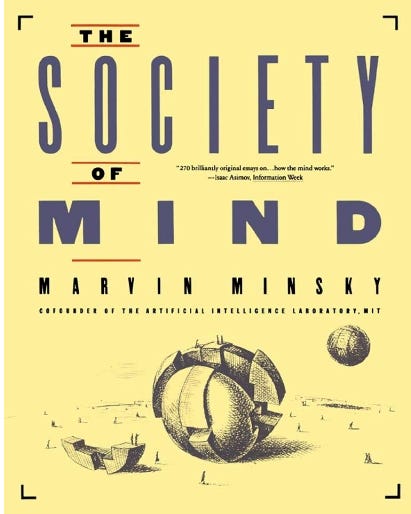
So, I have been reading work by Marvin Minsky and currently his book, Society of Mind, and watching this MIT Open Course Ware learning series with him on the book content. This first lecture is where I am currently at in my processing and find it fascinating. It does remind me that a good lecture/talk can be captivating.
Final Thoughts
AI in education is evolving rapidly(duh!), and it’s up to us as educators to harness its potential responsibly. As I shared in my presentation we cannot outpace AI, but we need to begin to think about how teach and learn with AI. Whether you're exploring AI tools, conducting experiments with multiple models, or empowering your students with critical thinking skills, the opportunities are vast.
What are your thoughts on these approaches? How is AI impacting your classroom or district? Or what are you learning this week?